An animal health related posting providing pet owners with current health trends, new happenings in the community and with ECLAP, and connecting animal owners to their veterinarians.
Friday, March 11, 2011
Wednesday, February 16, 2011
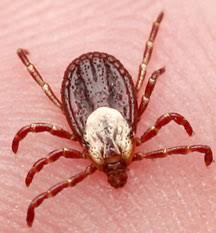
Check Me for TICKS!!!
While the wet winter has provided us with beautiful green mountains and serene trails, it some how created a perfect environment for tick breeding. Many of you have noticed your horses covered with ticks following a trail ride and are looking for ways to prevent tick infestation. First lets talk about ticks, as they are actually very interesting little bugs.
Ticks are actually from the arachnid family. One of the most interesting characteristics of a tick is the fact that they actually grow and extra set of legs as adults. Seed (or baby) ticks start there life with six legs and after they get there first meal they grow another pair of legs. Seed ticks have been known to swarm onto animals in mass numbers as high as 30,000 at a time. Ticks do not fly or jump to get on to an animal. They do tend to climb into bushes or tree and then fall onto there next meal as you or your horse walk past.
It is important to remember that ticks can carry illnesses from one animal to another. In fact, ticks are the primary disease vector in domestic animals. In terms of human illness, only one parasite spreads more illness -- the mosquito. Ticks can spread a wide variety of disease-causing organisms, including bacteria, viruses and protozoa. A freshly hatched tick might be free from disease, but as soon as it takes a meal from an infected animal, it becomes a potential disease vector. In fact, ticks can carry more diseases than any other arthropod in the world. Their efficiency at spreading infection comes from the way they feed. Many tick species feed on at least three hosts before they die. If one host is sick, the tick can carry the infection to the others.
If you find a tick on your horse's body or yourself then remove it as soon as possible. Many diseases transmitted by ticks require them to be attached for several hours before the host in infected by the tick. It actually requires a tick to be attached to its host for nearly 24 hours before lymes disease is transfered to the host. However, forget all the rumors you may have heard about tick removal. Do NOT crush or twist the tick, apply baby oil or petroleum, or "scare" the tick out with a lit match. These methods can cause the tick to regurgitate blood back into your horse, which increases the chance of infection or disease transmission. Worse, the above methods can cause the head to detach from the body, where it will remain beneath the skin.
Instead, use a pair of tweezers to remove the tick:
- Grab the tick firmly by the head, where it enters the skin
- Pull - do not yank - firmly and steadily straight away from the skin
- Dispose of the tick properly in a small jar of rubbing alcohol
- Wash the attachment site with a mild antiseptic
- Wash your hands
Unfortunately there is not a perfect solution for repelling ticks. The company that makes the Frontline product for dogs, used to make a spray on product that worked quite well. The Frontline plus or Advantix spot on products can be used on horses and will help remove ticks. The problem with the spot on products is that it takes two-three vials to place in the commonly affect area of your horse and it will only last for two weeks (these products cost about $15 per vial). Another option is to use a spot on Pyrethrin product such as Equi-Spot. (Here is a link to some on Amazon: http://www.amazon.com/Equi-Spot-Spot-Control-Horses-tubes/dp/B000WGU92Q). Another upcoming organic friendly fly repelling option is the use of wax-based catnip oil formulations.
Tuesday, January 25, 2011
Molly: The One Legged Wonder.
You gotta meet Molly...
Meet Molly.. She's a grey speckled pony who
Was abandoned by her owners when Hurricane
Katrina hit southern Louisiana . She spent weeks
On her own before finally being rescued and taken
To a farm where abandoned animals were stockpiled.
While there, she was attacked by a pit bull terrier
And almost died. Her gnawed right front leg became
Infected, and her vet went to LSU for help, but
LSU was overwhelmed, and this pony was a welfare
Case. You know how that goes.
But after surgeon Rustin Moore met Molly, He changed his mind.
He saw how the pony was careful to lie down on different
Sides so she didn't seem to get sores,
And how she allowed people to handle her.
She protected her injured leg.
She constantly shifted her weight
And didn't overload her good leg.
She was a smart pony with a serious
Survival ethic.
Moore agreed to remove her leg below the knee,
And a temporary artificial limb was built. Molly
Walked out of the clinic and her story really
Begins there.
'This was the right horse and the right owner,'
Moore insists. Molly happened to be a
One-in-a-million patient.
Survival ethic.
Moore agreed to remove her leg below the knee,
And a temporary artificial limb was built. Molly
Walked out of the clinic and her story really
Begins there.
'This was the right horse and the right owner,'
Moore insists. Molly happened to be a
One-in-a-million patient.
She's tough as nails, but sweet, and she was willing to cope with pain.
She made it obvious she understood that she was
In trouble. The other important factor, according
To Moore, is having a truly committed and compliant
Owner who is dedicated to providing the daily care
Required over the lifetime of the horse.
Molly's story turns into a parable for life in Post-Katrina Louisiana ..
The little pony gained weight, and her mane finally felt a comb.
A human prosthesis designer built her a leg.
The prosthetic has given Molly a whole new life,
Allison Barca DVM, Molly's regular vet, reports.
And she asks for it. She will put her little limb out,
And come to you and let you know that she wants
You to put it on. Sometimes she wants you to take
It off too. And sometimes, Molly gets away from
Barca. 'It can be pretty bad when you can't catch
A three-legged horse,' she laughs.
Most important of all, Molly has a job now. Kay,
The rescue farm owner, started taking Molly to
Shelters, hospitals, nursing homes, and rehabilitation
Centers. Anywhere she thought that people needed
Hope. Wherever Molly went, she showed people
Her pluck. She inspired people, and she had a
Good time doing it.
'It's obvious to me that Molly had a bigger role to
Play in life, Moore said. She survived the hurricane,
She survived a horrible injury, and now she is giving
Hope to others.' Barca concluded, 'She's not back to normal,
But she's going to be better. To me, she could be a
Symbol for New Orleans itself.'

This is Molly's most recent prosthesis. The bottom
Photo shows the ground surface that she stands on,
Which has a smiley face embossed in it. Wherever
Molly goes, she leaves a smiley hoof print behind.
Symbol for New Orleans itself.'
This is Molly's most recent prosthesis. The bottom
Photo shows the ground surface that she stands on,
Which has a smiley face embossed in it. Wherever
Molly goes, she leaves a smiley hoof print behind.
share ... with all of the
animal lovers that you know.
3 attachments — Download all attachments View all images
| Image1.jpg 105K View Download |
| Image2.jpg 23K View Download |
| Image3.jpg 45K View Download |
Thursday, December 23, 2010
A Veterinary Outreach Tradition
| The view from the top |
What November means to me: turkey (of course), warm days and cool nights (usually), northern wave swells and a cooling ocean (freezing already), the end of pelagic fishing (it never really started this year), and an annual trip to the Havasupai Reservation in the bottom of the Grand Canyon. VCF (Veterinary Christian Foundation) led by Dr. Rick Marshall has been providing annual veterinary services to the Supai Tribe for 27 years. Traditionally, we travel to Peach Springs, Arizona, on the Saturday before Thanksgiving and overnight at the Hualapai Lodge on Route 66. Sunday morning finds us motoring to Hilltop, 60 miles to the north, readying ourselves for the eight mile, 2000 foot drop from the Canyon rim. Monday and Tuesday are work days and Wednesday, the day before Thanksgiving, we helicopter out so all can be home for the holiday. This year we flew out in a snow storm.
| Supai |
| The valley floor |
The mailman is packed and leaving for Hilltop |
| Packing his own feed |
The Havasupai people have inhabited this spot for the last 800 years and until the reservation system was forced upon them. Traditionally, Winters were spent on the plains above the canyon where they hunted wildlife, gathered pine nuts and traded with other Tribes. In the Spring, they returned to the Canyon, living in the cracks of the walls and farmed the small river valley. They have never been known to be a militant people but rather shy.
| Dr. Chandler always enjoys his work in Supai. |
This past November, there were 34 in the VCF group: 10 veterinarians, 4 junior veterinary students, several medical technicians, a couple of contractors, family members, a fireman, and the remainder were from various churches from California and Nevada. After arriving in Supai on Sunday afternoon, we participated in a huge turkey dinner for the community in the church where over 100 people were served. There are approximately 600 inhabitants. Several hundred live outside the reservation in Phoenix, Flagstaff, Kingman etc. Those people always miss their home in the Canyon.
| Havasupai Bible Church (and Veterinary Clinic) |
| Small animal surgery recovery room |
| Pack horses on the way down. |
| The Havasupai Lodge at the bottom |
| Narrow path, tall walls |
| Sunday night after the community dinner |
| Nice elk rack |
| On the top of Navajo Falls |
| Dr's Cuadras, Smith, and Oman on the chopper out |
Wednesday, December 22, 2010
Equine Holiday Cheering
The pictures are of an aged mare that was rescued by a rescue facility. One of our clients re-rescued the mare. To be sure the rescue facility was giving good and proper care but had her for a relatively short time before our good hearted human made "Honey Bunny" her own. She has made a wonderful transformation, I hope you agree.
In the near future, you will be hearing more from the San Diego Equine Safety Net Coalition of which ECLAP is one of four equine veterinary practices to be on the Board along with horse rescue facility owners and county officials. Our aim is to "Keep the horse in its home" by offering material, educational and veterinary help to horse owners struggling to do so. The Coalition is on the brink of findings ways to identify horses and their owners that have a TRUE need of a temporary helping hand. We will be providing several educational opportunities to the horse owning community in 2011 and asking your help in identifying animals in need.
Thursday, December 2, 2010
To Blanket or Not to Blanket (Does my horse need one?)
Deciding when to blanket your horse can be challenging, especially in San Diego. When your friends in Minnesota are laughing at you because you blanket your horse, just explain to them how you actually had frost on your car in late November. The northerners just can't believe that it can actually freeze here in sunny SoCal. Cold winter nights combined with thin coats (developed after multiple 100 plus degree summer days) can produce some easily chilled horses.
Blanketing needs will vary from horse to horse based on their coat condition and tolerance for the cold weather. You will find that horses that have moved to San Diego from colder climates, will develop much thicker winter coats.
Here are some simple yes or no questions that can help you determine if your horse should be blanketed. A "yes" answer to any one means your horse would appreciate a little extra insulation.
1. Is it below 50 degrees Fahrenheit? Even if your horse has a natural (unclipped) haircoat, he may appreciate a blanket at this temperature. This is just a general rule of thumb, since other factors (such as wind, humidity and/or precipitation) may call for a blanket when it's warmer. On the other hand, some horses acclimate to colder temperatures, especially those with thick haircoats.
2. Is his coat clipped? If so, your horse may need a blanket (or at least a sheet) when the mercury drops|}below 60 degrees F.
3. Does he usually live indoors? If your horse lives even part of the time in a warm barn, he'll feel the cold more than a horse that lives outside full time.
4. Does he live in an open pasture? A full-time outdoor horse will grow a heavy coat to ward off the elements, but wind and rain can destroy that insulating effect. If there's no shelter in his pasture, he may need wind- and water-resistant horse clothing to stay warm.
5. Is his stall drafty? Drafts in your barn may have the same effect as outside breezes--they blow away that layer of warm air next to your horse's skin, making him feel colder.
article continues below
6. Is he shivering? Don't go by formulas--check your horse to see whether he's too cold. If he's shivering, blanket him (or add blankets) and get him to a shelter. (To see if your horse is too warm, slide your hand under his blanket; if he's sweaty, he needs a lighter covering, or none at all.)
It is important to remember to remove blankets in the morning as temperatures can get really high on many San Diego winter days.
These question have been adapted from an article written by Dr. Hower-Moritz that was published in horse and rider magazine.
Wednesday, November 24, 2010
What's Your Diagnosis: The Foot Problem
So the answer is.... "Canker"
Brenda Nellums is the winner. She got the question correct. Valerie and Mary were actually very close as Canker can be secondary to a bad case of deep central frog thrush.
Equine canker is described as an infectious process that results in the development of a chronic hypertrophy of the horn-producing tissues.1 It generally originates in the frog; may remain focal, but has the capacity to become diffuse and invade the adjacent sole, bars and hoof wall. Canker can occur in one foot or multiple feet may be involved. The etiology of canker remains elusive but wet environmental or moist unhygienic conditions have traditionally been thought to act as a stimulus, however, canker is commonly seen in horses that are well cared for and horses who receive regular hoof care.
http://www.thehorse.com/ViewArticle.aspx?ID=2782
Here is a link to a more in depth description of Canker found in "The Horse" magazine.
Subscribe to:
Posts (Atom)